
Low voltage reporting software
Low Voltage Reporting Software for Job Health and Operational Visibility
Low voltage reporting software for job health, WIP, billing lag, field productivity, closeout status, blockers, margin risk, and owner visibility.
What this software needs to do
Owners should not need to wait for a monthly spreadsheet to learn which jobs are stuck, which invoices are lagging, or which projects are hurting margin. Reporting needs to come from live job activity.
LowVoltageOps is built like a category-defining SaaS platform for commercial low voltage contractors, not a generic field service app. The product connects job records, field updates, scheduling, documents, closeout, billing readiness, margins, and reporting so the company can see the full operating picture before problems become expensive.
For low voltage owners and operations leaders, the value is not another list of tasks. The value is a shared workflow where the field can capture what happened, PMs can see what needs attention, accounting can see what is ready to invoice, and owners can understand job health without rebuilding the story from spreadsheets.
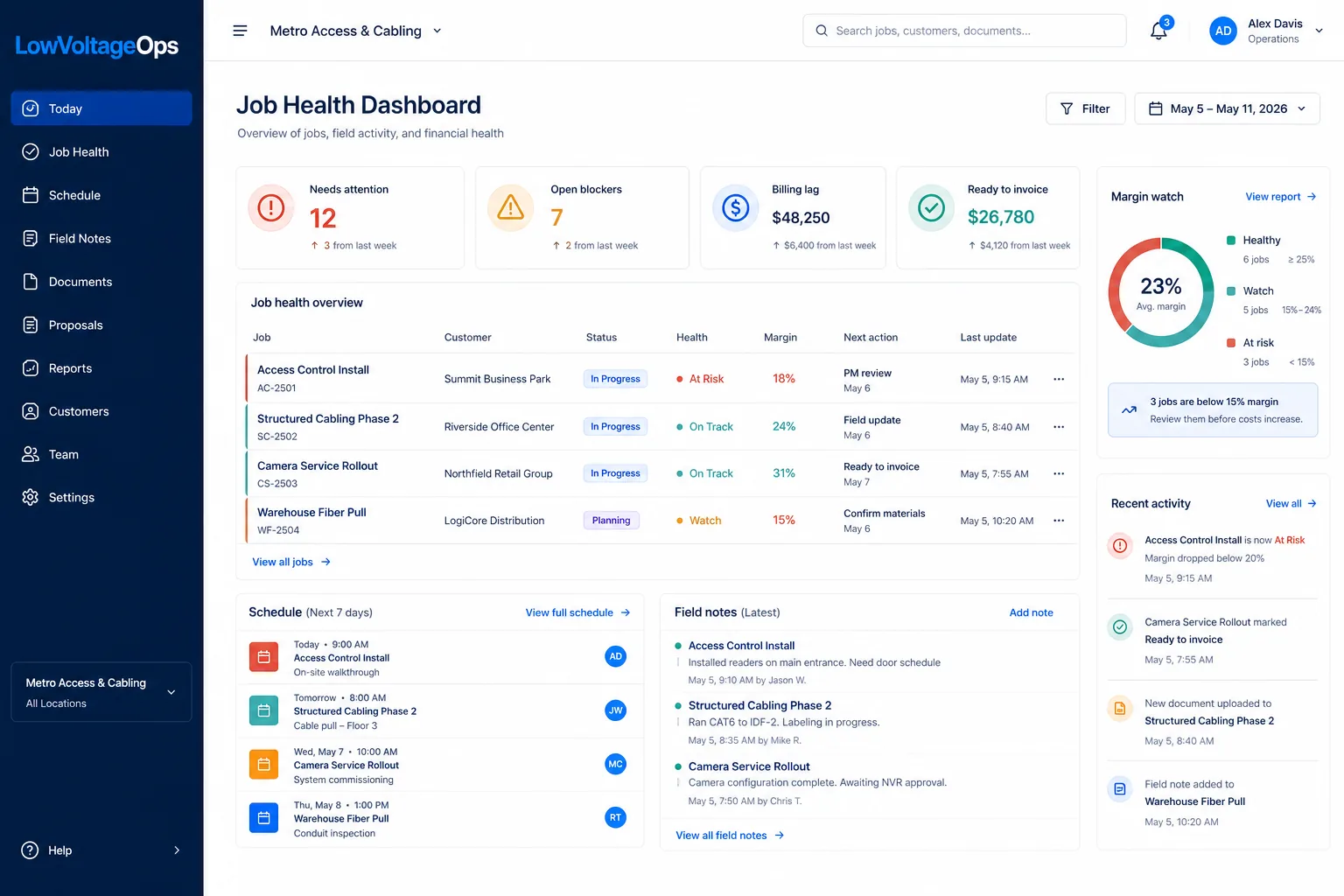
Core workflows for low voltage reporting software
The best software should match how the work actually moves from estimate to field to closeout to invoice. A page, board, or spreadsheet can show status, but a true operating workflow connects status to action.
- Job health reporting across active work
- Billing lag and ready-to-bill revenue visibility
- Closeout blockers, missing field updates, and punch status
- Margin watch and change order exposure
- Saved operating snapshots for leadership reviews
These workflows matter because low voltage work often fails in the handoffs. Sales hands scope to PMs, PMs schedule crews, crews capture field reality, accounting waits for proof, and owners need margin visibility. LowVoltageOps keeps those handoffs connected.
What owners, PMs, field teams, and accounting need to see
| Role | What they need | Why it matters |
|---|---|---|
| Owners | Job health, billing lag, margin risk, WIP, blocked revenue, and PM workload. | Leadership can act before cash flow or margin slips. |
| Project managers | Scope, schedule, field notes, blockers, closeout items, change orders, and next actions. | PMs can manage active work without chasing updates manually. |
| Field teams | Assignments, site context, required proof, photos, notes, time, expenses, and punch items. | Technicians can capture useful information while still on site. |
| Accounting | Approved scope, billing terms, change order status, closeout backup, and ready-to-bill status. | Completed work can move to invoice faster with less follow-up. |
Best-fit company profile
LowVoltageOps is a strong fit for low voltage companies that are past the early spreadsheet stage and starting to feel the cost of manual coordination. That usually means multiple crews, more than one PM, recurring commercial customers, mixed project and service work, or leadership meetings where job status has to be rebuilt from several disconnected systems.
The platform is especially relevant when a company is trying to reduce billing lag, standardize closeout, improve field accountability, protect change order revenue, and give owners a clearer weekly operating picture.
Useful related resources:
Frequently asked questions
What software do low voltage owners and operations leaders use?
Many teams use a mix of spreadsheets, accounting software, field apps, shared folders, text messages, and generic project tools. LowVoltageOps gives the team a low-voltage-specific operating layer that connects those job workflows more directly.
How does this improve billing readiness?
Billing readiness improves when field proof, closeout documents, change orders, customer approvals, and invoice backup are attached to the job before accounting has to chase them.
Does LowVoltageOps replace every existing system?
Not necessarily. The goal is to create the operating workflow that keeps PMs, field teams, accounting, and owners aligned. Some teams may still keep accounting or document storage systems while using LowVoltageOps for job visibility and operating control.